
Online Training
MEDICAL MIMICS
Recognizing and Responding to Medical Contributors in Mental Health
When therapy stalls, look deeper.
Depression that does not shift.
Anxiety that resists intervention.
Cognitive fog that lingers.
Emotional volatility that does not match the story.
Not every mental health symptom originates in the mind.
Many clinicians were never formally trained to recognize when physiological factors may be contributing to psychological presentations. The result? Clients remain in therapy longer than necessary while underlying medical issues go unaddressed.
The Medical Mimics Training equips you to recognize red flags, respond ethically, and collaborate confidently — without stepping outside your scope of practice.
Why This Training Matters
Research has long confirmed that physical health conditions can present as psychiatric symptoms. What has been missing is structured, accessible training that helps counselors know:
• When to pause
• What patterns to recognize
• How to document responsibly
• How to refer clearly
• How to collaborate without overstepping
This training fills that gap.
With over 20 years of clinical experience, Camille McDaniel, LPC, has seen firsthand how progress accelerates when medical contributors are identified. Not because of a new technique. But because someone recognized the pattern.
This is not about becoming a physician in the counseling room.
It is about becoming the kind of clinician who knows when to ask better questions.
This training is designed for licensed clinicians in private practice who want to strengthen their skills, student mental health professionals who are looking for a stronger foundation, and seasoned mental health professionals who want to refine their intake and advocacy process.
The Essential Foundations: Course Curriculum
3 Modules · 12 Lessons · 75 Minutes On-Demand
Downloadable Clinical Tools Included
Lifetime Access
Module 1: Recognizing Medical Mimics
Learn how to identify stalled progress patterns and differentiate common psychological presentations from potential physiological contributors.
• 33-Minute Video Lesson
• Case Study: When “Anxiety” Isn’t Anxiety at All
• Reflection & Quiz
• Downloadable Quick Reference Guide
Module 2: Red Flags & Ethical Responses
Develop a clear decision-making framework for when referral is appropriate and how to document concerns ethically.
• 31-Minute Video Lesson
• Reflection & Quiz
• Downloadable Clinical Trackers
Module 3: Advocacy & Collaboration
Gain practical tools for communicating with physicians and supporting clients in medical conversations.
• 15-Minute Video Lesson
• Clinical Discussion Questions
• Reflection & Quiz
• Collaborative Letter Template
Included Clinical Tools
• Quick Reference Guide
• Adult & Child Symptom Tracker
• Clinical Red Flag Checklist
• Collaborative Letter Template
• Documentation Support Tools
These resources are designed to strengthen clinical evaluation while maintaining scope boundaries.
Who This Training Is For
• Licensed clinicians in private practice
• Group practice clinicians refining intake procedures
• Graduate students seeking a stronger diagnostic foundation
• Seasoned therapists who want to enhance collaboration skills
If you have ever wondered whether something deeper may be contributing to a client’s symptoms, this training is for you.

Meet the Presenter
Camille McDaniel, LPC, has been a Licensed Professional Counselor since 2005 and founded Healing Psychotherapy Practices of Georgia in 2010. She is the founder of Christ in Private Practice, Inc., where she equips mental health professionals through consulting, continuing education trainings, and podcasting.
A former adjunct professor with over a decade of teaching experience, Camille has spoken at Richmont University, the Faith, Healing, and Transformation Summit, and on professional podcasts including The Holistic Counselor and Selling the Couch.
Her work focuses on strengthening clinical discernment at the intersection of biological, psychological, and ethical practice.
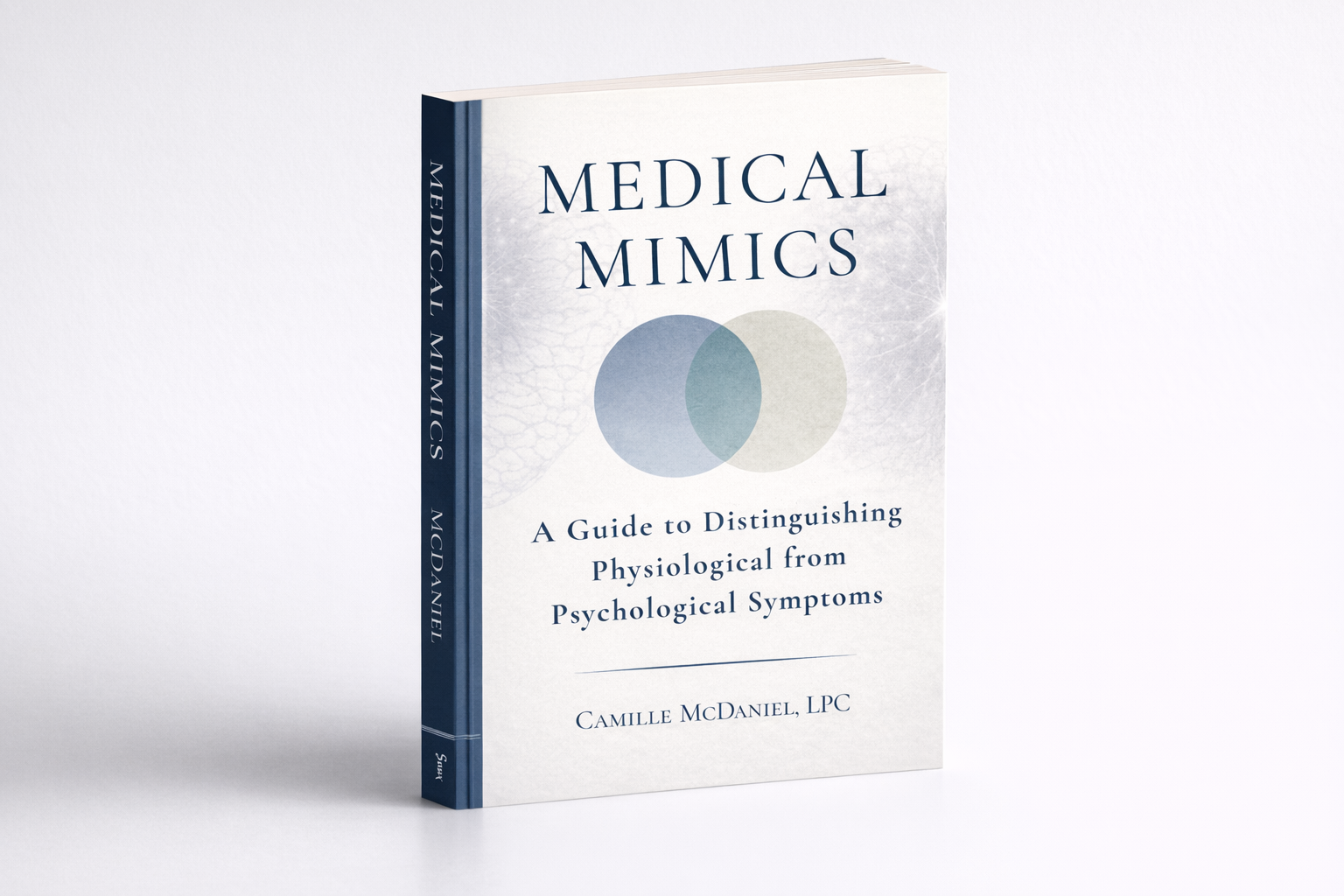
Coming Q2 2026: The Medical Mimics Book
The companion book expands on these principles with:
• Detailed case examples
• Research summaries
• Reference tables
• Expanded collaboration frameworks
Designed as a lasting clinical resource, the book deepens what this training introduces.
Join the training now and be the first to receive updates about the book release.
Strengthen Your Clinical Evaluation
When psychological symptoms do not respond as expected, ethical practice requires us to consider the whole person.
Medical Mimics gives you a practical, structured framework to do exactly that.