
Episode 73
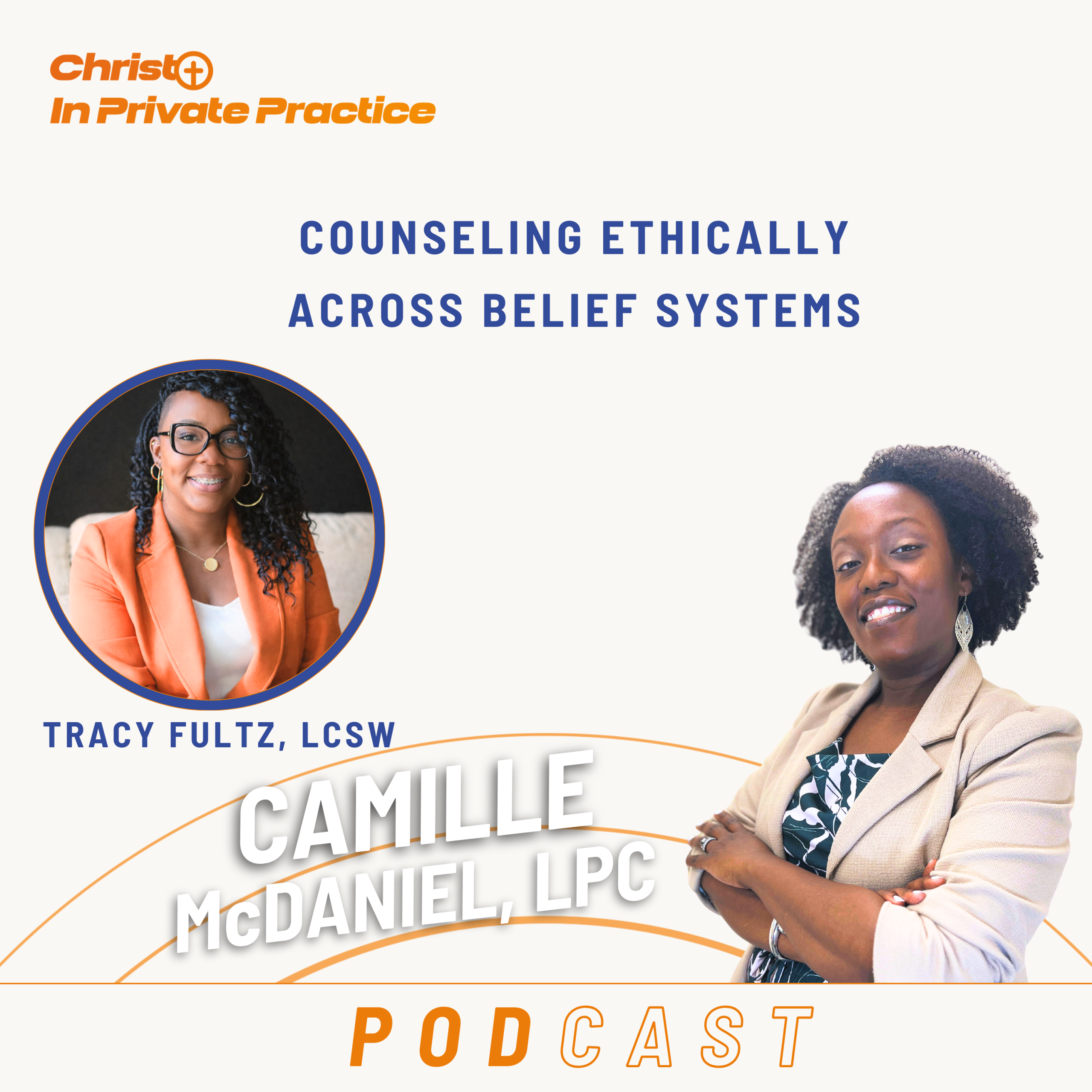
Counseling Ethically Across Belief Systems
This episode is eligible for 1 CE credit hour
Show Notes
In this episode, Camille McDaniel and Diana Rice discuss the ethical implications of podcasting in the counseling field, reflecting on a specific case study that highlights the importance of maintaining professional boundaries, the role of self-disclosure, and the need for cultural competence. They emphasize the significance of assessing client needs and progress, the impact of social media on therapy, and the necessity of being accountable as Christian clinicians. The conversation serves as a reminder to prioritize ethical practices and the well-being of clients in the ever-evolving landscape of mental health care.
Time Stamps
02:36 The Tension of Faith and Professionalism
Connect with Tracy Fultz, LCSW
Heartfelt Needs Counseling & Caring Center, Inc.
Heartfelt Needs Counseling & Caring Center, Inc.
Tracy Fultz, LCSW on Amazon
The Integrated Care Letter
Therapist Self Assessment Questions
This is designed to help you reflect on how spirituality and religion are approached in your clinical work.
Podcast Episode Transcript
Camille McDaniel (00:01.748)
Welcome back to Christ in Private Practice. As always, I am glad that you are here. And as you see, we have a guest. So today we’re going to be taking a closer look at an issue that has been a part of, think, our community as it relates to ethics and professionalism. It’s been a discussion that’s been on the table. We may not always see it outright, but it’s definitely in some groups and sometimes behind the scenes.
and it surfaces for us, especially as Christian counselors. And it’s going to be the topic for today, which is how do Christian counselors ethically serve both Christians and non-Christians? It’s not a new topic, as I said, but we wanna take a look at it because it definitely comes up.
with questions of how we can respond and how we can help and make sure that we are doing things ethically and also make sure that we’re doing things that do not allow us as Christian counselors to come into conflict with the Lord that we serve. So we’re going to be taking a look at all of that today and making sure that we answer any questions according to the faith. So to help us think through all of this, I am joined with my colleague,
Tracy Fultz. And Tracy is a licensed clinical social worker. She’s also the owner of Heartfelt Needs Counseling and Caring Center, Inc. She is an award-winning social worker, as well as a talented author and therapist. And she is deeply passionate about providing faith-based and ethical care. And she works mostly with women, but she also has stepped into the training field. And so I am
delighted to have her here so that we can both talk about the intersection of ethics, identity, and faith-informed clinical work. So without further ado, thank you so much, Tracy, for talking with me for this episode.
Tracy Nalory Fultz (02:10.161)
Thank you, Camille, for having me. I’m so excited. I love this topic.
Camille McDaniel (02:14.508)
do too. we’re going to just kind of jump right on in as we talk about this today, how Christian counselors can ethically serve Christians and non-Christians. And so let’s look at this. First of all, why do you think that this topic even comes up for Christian counselors?
Tracy Nalory Fultz (02:35.579)
think it comes up because there is such tension between church and state, so to speak. In school, I worked with the Department of Children’s Services for 22 years, and there was a lot of separation, church and state separation. And I think also we’re taught to be silent about our faith.
right? Like we’re not supposed to impose it on others. So that’s apart from coming into the clinical space. So I think we bring all of that.
Camille McDaniel (02:57.942)
Yes.
Tracy Nalory Fultz (03:06.243)
into the clinical space and it leaves us with questions because my training initially to get my masters, it wasn’t a topic of conversation. It was no training, even some of the things where I can see it. I’m CBT. That was what we did in school. I can see the Bible throughout it. But and I went even to well, the school that I went to was Southern Adventist. It was seven day, but there was really not a conversation of how do you bring it in? And I think now people are seeking it out so much.
And so therapists are trying to figure out do I don’t I is it ethical is it not so I think that it’s a heated Topic that needs to be addressed and it’s present now
Camille McDaniel (03:47.724)
Yes, and I’m glad that we’re talking about it now because you’re right. I did not have that training and I had secular training and I then had to, you know, bring my knowledge of the word and start to study how it goes along with the training I received. it was actually in my graduate school training mentioned that we don’t bring ourselves into the room. We don’t bring our faith. We don’t bring our opinions. We don’t bring our worldview. Yeah. So I
Tracy Nalory Fultz (04:10.619)
long flight.
Camille McDaniel (04:15.256)
think yeah, you’re touching on something there because I think then that caused a lot of confusion where it left a gap and people aren’t really always sure what to do. Yeah, so then.
The next thing I wanted to bring up and ask you was like, you know, where do counselors, where do you, where do you think based on just what you’ve seen over time, where do you think counselors are starting to feel most uncertain when they are working with clients who have a belief system that’s different than theirs?
Tracy Nalory Fultz (04:46.843)
I think they’re most uncertain about if I do bring it up, when and how. How do I approach that conversation? I think sometimes also where they’re most uncertain or uncertainty comes from them is because they maybe don’t feel like.
They don’t know what it means for themselves. If I work with someone that’s going against my beliefs, my values, what does that say about me? And I know we’re confidential all there, but I think sometimes we have that inner narrative. What would others think if they know? And I think that begins to stem. It’s that inner work. One of the things that I say is that we are first in the room, right? So I have to have self-awareness, what’s going on with me before I can show up.
Camille McDaniel (05:22.264)
Mm-hmm. Yes.
Tracy Nalory Fultz (05:34.811)
for clients that have the same beliefs as I do. So I think the uncertainty is because they’re somewhat unsure maybe about their own beliefs. So how is that gonna conflict? And then the when and how do I bring it up?
Camille McDaniel (05:46.083)
Yes.
Camille McDaniel (05:49.514)
That makes sense. you have a training that you offered. And I think it really lays out quite nicely how to take the steps to do it. Because again, for those who are wanting to and feeling called and led, hey, I need to bring my whole self into the room, my faith included and serve those who also have the same faith. Now what do I do? Like what does informed consent look like? What do I do if it comes up in the room? How do I address it?
So yeah, I think you’re seeing, I’ve seen some of what you’re talking about as well. I just don’t know that there’s a good framework. And I think that leads to the discomfort. Yeah. And I think that even goes into, I was going to say, what are your thoughts on like, why some counselors might feel uncomfortable integrating their faith or even having clear boundaries?
And maybe, I don’t know, maybe your answer might be a little bit of the same, but I noticed that sometimes it’s about that foundation. But I also noticed that sometimes it is a little bit of fear of being bold in their faith. So I don’t know. Why do you think some of the counseling?
Tracy Nalory Fultz (07:00.229)
We are being bold, like a bold about it in…
Camille McDaniel (07:03.784)
Yeah, bold about it and like just sharing this. This is the faith that I integrate into the services I provide, you know, for those who are coming with that worldview and want it integrated. And even if you’re not coming with a faith base, this is a faith, a worldview that influences my work. I wonder if sometimes they are nervous about backlash and so therefore are not so upfront. Yeah.
Tracy Nalory Fultz (07:30.755)
about. Yeah, I think backlash, I think sometimes it’s they’re not clear about what the code of ethics say. You mentioned I’m a licensed clinical social worker and people now it’s so it’s to me I feel like left up to interpretation. It’s not clearly said. So when I read the code of ethics, I see that it backs up what I do. So that
doesn’t make, initially I was a little afraid until I researched it myself and read it and read it because you have the people that give you the fear base with code of ethics and that, the board is gonna do this and they’re gonna look. So I think sometimes people are bold in their faith. It’s still afraid to be bold in their faith because of that, the way that it’s presented if you haven’t taken the time to read it for yourself. But.
depending on the lens that you’re reading it through, it can support you or not. I kind of do, I’ve served both. I’ve served Christians and non-Christians. And the way that I present it is I, well, you can see on my page, if you read my page, you’re going to know I’m a Christian. And I do it, we’re talking about informed consent. And I think that’s what’s going to save you. Because one, you got to worry. I say worry about who’s before you, right?
Camille McDaniel (08:51.212)
Mm-hmm.
Tracy Nalory Fultz (08:51.943)
Part of what the board will teach you, code of ethics will teach you, is if you are called before the board, can you justify your actions? Can you explain why you did or didn’t do something and how it served not yourself, but how it served your client? And so then when you look at informed consent, my informed consent starts at consultation.
Camille McDaniel (09:06.51)
Yes.
Tracy Nalory Fultz (09:14.893)
I offer a free 15 minute phone consultation and out the gate I say, I’m a Christian. I don’t try to convert. This is what that means. I believe that we’re body, soul and spirit. And when we’re in that space, we’re going to look at whatever your presenting concerns are, how’s it impacting your body.
How’s it impacting your soul, your mind, your will, your emotions, your intellect, your imagination, you know, and how’s it affecting your spirit if you believe that. And when I say spirit, can really look at that to mean different things. Some people take their spirit and they’re talking about meaning, purpose, connection to a higher or greater power. For me, that higher or greater power is Jesus. For you, it might be connecting, you know, in…
in the outdoors, so it can mean a lot of different things, but I give space for that as long as I feel like it’s not harmful to me. So I’m giving them the information that they need. Informed consent means giving them enough information to make sure that they make the decision that they feel is best for themselves. So I’m giving them information about me, how that’s going to show up in the space together at their pace.
Camille McDaniel (10:25.61)
Okay, so that’s spot on because then you really are saying that it is important and I was going to throw that one out there. It is important to be clear about your professional identity. It is important to be clear about how you deliver your counseling services. And like you said, that really saves you because when you are clear and give an opportunity for informed consent, then even if somebody changes their mind,
Tracy Nalory Fultz (10:36.519)
clear.
Camille McDaniel (10:54.336)
and decides they don’t really want the service you’re providing or they don’t want somebody who has that worldview, then you would let them know ahead of time. They don’t feel like it’s a sneak attack. They’re not blindsided.
Tracy Nalory Fultz (11:04.049)
Yeah. And I find that they appreciate it. They appreciate it.
Camille McDaniel (11:09.214)
Absolutely, absolutely. Yes and even starting with like said online. So like if you go to the person’s website you actually have an opportunity to read. Let’s say by chance though they came through a insurance referral if you accept insurance and they didn’t really even look at the website they just contacted the referral their insurance provider gave them and then they meet you still going through it and explain it helps to have a a good foundation.
Tracy Nalory Fultz (11:24.636)
Mm-hmm.
Tracy Nalory Fultz (11:38.705)
good from that because they know they know from and I know everybody doesn’t do a console but for me it helps weed out and not waste my time right so they know from the gate and even then I incorporated we go any deeper when they get the intake
Camille McDaniel (11:46.572)
Yeah.
Tracy Nalory Fultz (11:54.405)
packet, you know, it’s in there. This is what this means. You know, it’s faith based, not trying to convert. can show. mean, there’s there it is in written form. And then we revisit it again a little bit more in the intake process. And something else that I and I share this in my training that I do, I came up with what I call my three or principles that I operate according to. And I tell my client, you know, even though I’m the expert, you know, meaning in this field for skills.
Camille McDaniel (12:08.376)
Yes.
Tracy Nalory Fultz (12:23.091)
I know I say I’m the professional, even though I’m the professional, you’re the expert of your experience. And so when it comes to counseling and we talk about what counseling is, talk therapy, because I’m not medication management. I say, no, talk therapy. And I’m kind of a little bit solution focused too. I’m goal oriented. I tell them the type of therapist I am, right? We’re going to talk because it’s talk therapy. Are you ready to talk? You you’re just getting your personality in there, but I let them know what it means. But then I tell them.
Camille McDaniel (12:39.273)
Mm-hmm.
Camille McDaniel (12:47.47)
Bye.
Tracy Nalory Fultz (12:50.929)
I have three Rs. The Rs are you can receive what I say. Anything that I say in this space is open to you and you’re fluent and you’re taking it in and you’re just, we’re just going and you’re hearing and it’s sitting well with you. You can resist what I say, right? And with the resistance is we’re going to have some back and forth and you might be like, whoa, now Tracy, I don’t know about that. And so we got that good back and forth. And I’m like, I love it. I love it. Bring it on. Feel safe to do that.
then you can totally reject what I have to say. If it doesn’t sit well with you, if the pace is too much, if it’s not the direction you want to go in, you can totally reject it. I am good with that. That is okay. This space is about you, not me. That gives them even more, you know,
Camille McDaniel (13:35.606)
those three Rs. I believe I’ve worked like that myself in practice, but I love that you specifically broke them down because I don’t have a breakdown. But yes, I’m very collaborative. And that’s exactly what you just described in detail. So that it gives the client, I believe, an opportunity to get even closer to their therapist because they you’re you’re essentially telling them you are free to be yourself.
Tracy Nalory Fultz (13:49.201)
Mm-hmm.
Tracy Nalory Fultz (14:00.593)
the years.
Camille McDaniel (14:00.608)
You are free to disagree with me. Yes, I have expertise in this area, but there’s going to be some places where you have expertise and you’re going to help me to see your point of view. I love that you break it down like that and then share it with them. and all right. So while you’re you’re specifically giving us points so that anybody hearing this can also say, OK, wait, let me write this down, because how do we get started? What would you tell them then would would look like?
informed consent. What does ethical informed consent actually look like for a clinician who happens to be a Christian?
Tracy Nalory Fultz (14:39.185)
for a clinician that happens to be a Christian. All of what I just said, right, that’s because you’re giving them information, but if you’re saying ethical informed consent as a Christian, then I do go, I say, I’m a Christian and I say what that means because it can mean a lot of things, right? I say, I’m a Christian who believes in Jesus and everything that the Bible teaches. That’s what I mean by Christian and how that shows up in this space to the degree that you’re comfortable.
Camille McDaniel (14:55.148)
Yes.
Tracy Nalory Fultz (15:08.121)
and I break down what it can include. It could include prayer, can include scripture, can include worship, know, whatever feels comfortable. But for me, I don’t bring it into this space unless you’re comfortable with it and we’re going to check with it. And I do go ahead and share. I said I have clients that we pray at the end of every session. If you’re not comfortable with that, let me make a note now and I’ll never bring it up again.
unless you do. So I tell them how it can be incorporated. If you want to incorporate your faith, I’m going to ask you about what your I told you a little bit about what mine is. Tell me about what yours is. If you say you’re a Christian, what does that mean? If you say I’m not, I’m spiritual. Tell me what that because being spiritual and being religious. We talk about this in my training, two different things. And I give space for that for because for me, I feel like I’m more spiritual.
than religious, even though I’m a part of a faith and a community. But when I get into my personal practices, my faith is my relationship, not rigid dos and don’ts.
Camille McDaniel (16:05.92)
Mm-hmm.
Camille McDaniel (16:11.756)
Yes, yeah and we you know you were you were mentioning that just a little bit before we on air with the podcast about its relationship. It’s not so legalistic and because of the relationship that can help us to desire more and more to do the things that are told of us but again like you said everybody doesn’t subscribe to that.
And so getting real clear allows the client to know, hey, we are exactly aligned or we have a different view of this and what do I want in my counseling experience?
Tracy Nalory Fultz (16:49.125)
And I think that’s important in this part with the therapists that are wanting to integrate it to be okay with that form of disclosure because that’s a part of the informed consent, right? So a lot of people are like, you’re not supposed to share your faith or tell your faith because that’s gonna persuade them. Well, no, I’m informing them so they can choose if they wanna move forward.
Camille McDaniel (17:12.798)
Absolutely. So then that means for some who are listening, they are absolutely comfortable with that. And for some who are listening, this gives them an opportunity to start to get clear on where they stand and how they would then communicate where they stand to their clients. And as you said, when you were talking about what you do with your clients, being able to share who they are, but also allow the client to know
this does not mean this is something you have to accept for yourself or your counseling experience. I am just sharing openly so that you can make an informed decision of if you feel I am the right fit for you. Now you
Tracy Nalory Fultz (17:50.659)
And you have to decide if they’re the right fit for you as the therapist.
Camille McDaniel (17:56.002)
That’s true. Yes. And that’s also ethical. Because if you know that there’s going to be a conflict, because what you provide is not going to be in the best interest of the potential client, because that’s not what they want, but that’s where you are trained and that’s where you rock and roll that you’re laying, then they now get to make a decision and be able to stay or move on if they need to. I know you mentioned
Tracy Nalory Fultz (17:59.397)
Mm-hmm.
Tracy Nalory Fultz (18:21.691)
Yeah, because it’s about informed is about them and you.
Camille McDaniel (18:26.218)
Yes, yes and that’s again that’s us getting comfortable with that’s all right and that is all right and you do consultations and I wanted to also just quickly just make a note in the in the podcast to say if you’re not able to do a consultation then make sure that you are clear on your website on any directory that you’re on please make sure in your paperwork you know or when they get there like we’re talking now
have an understanding of how you want to be able to share with them, inform them how you operate, who you are, give them the opportunity to have that included or not. And, and that way they can definitely you have multiple steps so that if something came up in the board wanted to know what steps you took, then you are right and in order with everything that you have chosen to do. Okay.
Tracy Nalory Fultz (19:17.243)
And I would say to those who don’t do the consultation, kind of hold the intake, your initial session as a.
Camille McDaniel (19:22.254)
Mm-hmm.
Tracy Nalory Fultz (19:27.385)
like that, you know, in discernment counseling, you get them to commit to one, right? So if you just say, my intake is just the one. And at the end, you’re going to check in. Hey, how’s this feel? Do you think you want to move forward with more? So it does. If you get into that intake and you feel like, they’re not a fit or they don’t choose you, we don’t get offended. We’re going to refer you, you know, to who’s best for you if we can. But it doesn’t have to move forward if you get in there and you don’t have a feel.
Camille McDaniel (19:49.774)
We’re not going to.
Camille McDaniel (19:54.776)
that’s very freeing for a lot of people. You don’t have to move forward if it’s not going to be a good fit because, and this is where I have seen some questions. Matter of fact, there was just, I think some conversation online that I saw in the last maybe week or two where people were talking about what if it’s not a right fit, you know, what if the client is not a right fit and or if I don’t get a good feeling about it.
what you’re talking about, what we’re talking about together is about making things step by step. So you have an order, you have a procedure that can be replicated. This is not just saying, don’t get a good vibe. This is saying I have gone through steps to inform, steps to allow you to express yourself. We have now assessed what I have shared, what you have shared and determined what I’m offering is not going to be in your best interest.
or the client determines what is being offered is not going to be in their best interest. And I think that that’s very clear that way if somebody brought it up to the board for, I don’t know, abandonment, even though it might just be the first session. It’s like, well, these are the steps I took to ensure that the client was getting the best care and that we were a good fit for treatment, you know, that I had what they need.
Tracy Nalory Fultz (20:53.253)
message.
Tracy Nalory Fultz (21:12.389)
Right. You don’t be afraid to educate. Out the gate, first session, educate on client therapist fit and why it’s important. Because I cannot tell you how many clients I have had that I thank God that they came to somebody else because their experiences were horrible and that could have been cut off at the front end.
Camille McDaniel (21:32.94)
Yes.
Tracy Nalory Fultz (21:33.607)
You were talking about client therapist fear because everybody’s not gonna be a fit I even tell my people you know when I do the phone calls go on my page because I’m virtual my practice is completely virtual Listen to my voice look at my face feel me cuz I mean it’s sometimes that simple I can’t I can’t stand their voice right you might not lose voice You know hands person you might can’t get with that right that might make you more anxious
Camille McDaniel (21:52.227)
Bye.
Tracy Nalory Fultz (21:59.673)
And so we educate on client therapist fit at the beginning. So at the end, can say, go back. Remember, we talked about client therapist fit. So let’s talk about that before we decide next steps. How do you feel?
Camille McDaniel (22:11.106)
That’s wonderful. Getting comfortable, like you said, with that education. I have done that as well when people are at, and usually that has come up for me in my practice when somebody is, has seen my, it turns out has already seen my bio, but then with it, they may have their own life experiences around what is on my page. And then they’re like, this is who I am. This is what I need help with. This is how I live or whatever. Is that going to be okay for you?
And usually that is like, you know, is there an acceptance there, you know, on my end? And I usually will then, like you said, well, have you gone to my page? Have you read about how I practice, who I am? And they’re like, yes. And I’m like, do you feel okay about me? And again, like you’re sharing and being okay with that, that’s all right.
Tracy Nalory Fultz (22:53.799)
Mm-hmm.
Camille McDaniel (23:00.418)
You know that is alright and that’s that’s just good care allowing people to have choice. We don’t want to try to convince somebody we’re the right person. We just want to be able to reach the people we are supposed to reach. Yeah.
Tracy Nalory Fultz (23:11.079)
And it’s so if they are someone who works with both, sometimes I have had non-believers or people or Christians living a lifestyle that they know they not come specifically to me because of what they say. We’re talking about being bold and then letting it be out there. There are people that are seeking us because we are bold and put it out
Camille McDaniel (23:28.493)
Join us.
Tracy Nalory Fultz (23:33.563)
there. So I had one specific couple. They were and I’m probably going to get the language messed up here, but he was married to a woman, but he had same sex attraction and she was poly. I think that’s what it was, but she had multiples even though they had theirs. And when they came in, I talked about it in consultation, talked about it in the intake and he even though she wasn’t a believer, she doesn’t, she had, she identified
as an atheist, he identified as a Christian. And when I explained, you know, okay, in marriage, I even share, I believe that a marriage is between one man and one woman. I can help.
in certain areas, but how do you feel that I have that belief? And he was like, I knew it from reading your page. This is what I want. I want to get back to my faith. I love my wife. I accept her. But I want us to be grounded in what I believe is true. They were good for it. I was good with it. And we worked.
Camille McDaniel (24:21.198)
Hope.
Camille McDaniel (24:34.424)
Perfect. Perfect. And that, you know, I love that you shared that first of all, it was going to touch on something I was going to ask you about how we might be respectfully and ethically and professionally, how might we set certain boundaries if we have clients coming to us that have life.
life patterns or experiences or things that they believe in that do not look like what we hold as truth and what we believe in and that’s a perfect example. I actually had and I wonder how many people do have this and how they also handle it ethically and professionally but I had a similar situation where somebody’s life and how they were living they had faith in Christ, their life and how they were living
was different than what biblical truth would state, but they saw my profile and they wanted to work with me, but I wanted to make sure that there was no offense. And so I wanted to be clear on how I practice and how my worldview influences that, see how they felt and ask what part or how much, I don’t think I asked what part, how much of your faith do you want to bring into this? Because I want to be mindful of that as we move forward together. And they were like, I want to bring it all in.
And so then I said, okay, so what you just shared, can I gently push here? Because according to your faith, there’s gonna be some conflict and let’s talk about how you feel about that. I think people can be very understanding and appreciate when you are clear. When you’re clear, when you don’t just surprise people, when it’s like, well, I didn’t know that’s what we’re doing and that’s where we’re going in the session.
Tracy Nalory Fultz (26:08.229)
when you are.
Tracy Nalory Fultz (26:13.647)
Right. Yeah, clarity creates safety.
Camille McDaniel (26:20.054)
Absolutely, perfectly said, perfectly said. then we, and just so everybody knows, because I wanted it to be really kind of clear, because I feel like this is such an important topic. As you all are listening to this podcast, you will go back, you will be able to also see that we have covered why it is very important for counselors to be clear about their professional identity from the beginning. We’re talking about what it looks like to
ethically inform our clients. When you happen to be a counselor who is a Christian and also provides Christian counseling services, but may see all people. Like Tracy said, I also in my practice see all people. They do not all come with a faith of Christianity. And even if they do, it doesn’t always look the same. clear on that. then let’s jump into this one. How can a counselor
How can we, and I know we’ve talked about it, but let’s see if we can’t kind of specifically give some steps for everyone who’s listening. How can a counselor respect a client’s beliefs without setting aside their own values? What does it really look like in the session? I feel like you kind of answered this a little bit, but I wanna specifically put it out there.
Tracy Nalory Fultz (27:34.405)
And I think.
Tracy Nalory Fultz (27:40.027)
And I think the work initially, Camille, is done within you, right? If we’re talking about respecting someone that has different.
values, practices, beliefs, serve a different God or whatever. The work is first going to start with you because we’re the first person in the room and I have to be aware of my values, my biases, right? My blind spots. I got to work to get a better understanding of what they may be. My things that I’m hardcore strong about that could move me if it’s brought in, you know, to session.
So I think the first step is do your own work, whether it’s training, supervision, listening, because you have great podcasts. I love your podcast. listen to them listening to podcasts, getting into the discussion. You got to do your own work.
Camille McDaniel (28:22.67)
Yeah.
Tracy Nalory Fultz (28:34.767)
And so part of what I do in the training that I offer is, because I love journaling, I love reflection prompts and all this kind we do those kind of, I have a lot of that I share, you asking yourself these questions. So first step is do your work. You got to do your work. You’re going to say something.
Camille McDaniel (28:34.914)
Yeah.
Camille McDaniel (28:50.584)
I like that one. I like that answer. every time you’re like, we talk about that in the training. Now look, for everyone who’s listening to the podcast, I am not somebody who, first of all, you all know, usually you all are seeing me and then you have sprinkles of people who join me on the podcast for different topics along the way, because I want to just be very mindful in this season of who is on the podcast speaking to you all. But Tracy really does have a good training.
Like, and it’s not, so Tracy doesn’t know I was gonna say this, but Tracy does have a good training. So if everybody who, if anyone who is listening, whether you happen to be a student in grad school, whether you happen to be a seasoned professional or just starting out, and you’re not sure because your training in grad school did not prepare you for this, and you really haven’t been prepared in any other area, take the training.
so that you don’t have to go along guessing, so that you don’t have to feel unsure or even feel a bit nervous in the event that somebody claimed that you’re not being ethical because you have brought your faith into the room in a way that doesn’t sit well with them, go ahead and take her training so you can actually have some step-by-step ways of doing it, have some role plays or have some worksheets like you know just have some resources so that way again
You don’t have to guess and this is something that can be replicated with every person that you serve. Yeah. So anyway, back to our regularly scheduled conversation. let me, okay, so let’s talk about this one. Where, where do you see that counselors unintentionally can cross an ethical line when it comes to faith?
Tracy Nalory Fultz (30:24.283)
Thank you.
Tracy Nalory Fultz (30:40.401)
when they bypass it.
because if you’re unaware of what someone, what they’re holding as their belief, what their spiritual experiences has been, you don’t have the knowledge to kind of know what direction to go in. So you could say something, do something, take them somewhere. And remember we talked about this ethical is to do no harm. You can take them in a space or bring up something that is harmful because there’s ignorance, because you didn’t ask. And I see that’s probably the main, the uninformed because
Camille McDaniel (30:42.711)
Hmm.
Tracy Nalory Fultz (31:11.843)
If you’re concerned about when and how should I do it, that means you care, right? So if we care, we’re gonna do the work to not harm, but sometimes our ignorance causes us to harm.
Camille McDaniel (31:16.695)
Yes.
Camille McDaniel (31:24.104)
Okay, so then, all right, so then let’s say our ignorance has caused us to harm and now we’ve gotten ourselves in a little bit of hot water and we’re in the session. So then what might be some like appropriate boundaries in those moments to respond to the client? Like how can we kind of shift the focus and get back on track? Because I think sometimes I feel like just owning it, know, just stepping in and just own, mean, do you, mm-hmm.
Tracy Nalory Fultz (31:43.707)
and get back on.
Tracy Nalory Fultz (31:48.529)
That’s the key. We have to be humble, right? We have to operate from a place to say, I’m a professional, but I’m human, right? I’m in this space as your support, as your aid, as an educator, but I don’t know it all. And you know what? Let me take it back because that’s something that I didn’t ask you about. And I’m sorry. Is it good to, can we talk about it now or do we need to talk about it later?
Camille McDaniel (31:54.414)
Yes.
Camille McDaniel (32:16.12)
Yes, that’s, yep, that is right. I absolutely agree. Being humble. Again, even for ourselves, you think about how you actually respond to somebody when maybe they misspeak or act in a way that kind of takes you off guard and then they own it and then they say, well, I’m sorry. And then they take a step back. All of the agitations sometimes can kind of mellow a little.
Tracy Nalory Fultz (32:21.969)
Yeah.
Tracy Nalory Fultz (32:42.375)
Especially when you’re genuine, right? I’m not gonna say all of that because you’re a dollar sign before me, right? I’m gonna say that because I’m genuinely concerned and I’m sorry and that was not my intent. I’m here as a caring, like they can sense that, right? So if I’m gonna not just say it, but hopefully it’s gonna come across in my non-verbals and the energy that I give off to them.
Camille McDaniel (33:03.18)
Yes, yes they can.
Tracy Nalory Fultz (33:12.227)
And so that brings it down. And I found being humble in space, that’s something else that it builds trust, right? If I can be able to be not only culturally competent, but culturally humble, like we’re practicing cultural humility, it builds trust. And so if I miss them, you I had one trainer is like, you know, when they talk about when you’re doing trauma work, if you open them up,
Camille McDaniel (33:18.829)
Yes.
Camille McDaniel (33:32.002)
Yes, absolutely.
Tracy Nalory Fultz (33:41.307)
You got to close them back there. You know, close them, you know, before you. So if I missed step and I hurt, I got to start the process to heal. And I do it right then at the point, because sometimes we don’t know until after, right? I’ve had several sessions and not even just where faith or I missed the client’s pace. I missed a moment and I rushed them through something and it’s with me and sits with me. And so when we come, sometimes there’s an email of, hey, I didn’t give space for this and I apologize.
Camille McDaniel (33:50.434)
That’s true.
Camille McDaniel (34:02.946)
Yes.
Tracy Nalory Fultz (34:11.099)
Do we need to get you in sooner? But when we do come back, can we start here? Because I owe you an apology or I owe you a moment where we need to sit in awareness. I need to acknowledge, like I own it.
Camille McDaniel (34:23.18)
Yes, and I think people are not used to that too, to even apologize, to even say, know what, I’m so sorry because I did X, Y, and Z and I noticed that that didn’t work well or we weren’t ready for that. So I don’t want you to feel like I’m pushing or anything like that. I think people are oftentimes used to more of the expert, like, you know, that just keeps on going no matter what, no matter what and not stopping.
Tracy Nalory Fultz (34:26.119)
Mm-hmm.
Tracy Nalory Fultz (34:46.471)
Right. Yeah.
Camille McDaniel (34:48.184)
So yeah, I think that is definitely a good way to, like you said, not just treat people like they’re a dollar sign, but to really be genuine in what you are bringing to the table as you’re talking to them. I feel like we’re going through, I was gonna bring up a few things and I’m like, we are already covering these topics. We are rocking it, because I was gonna ask, yes, please.
Tracy Nalory Fultz (35:04.551)
You
Can I say something about that though before we go to something else when we’re talking about culture? That’s healing. Like I’m all about, we got to do the work too. So when I’m able, it took me during the work to say, I’m not there to fix them, right? I’m not there to put on a show. I’m not there to be perfect. Like I had to do the work cause I would come away feeling like, did I do it right? Did I help them? Hold their, like I took ownership of their healing.
Camille McDaniel (35:36.184)
We are healing. yes.
Tracy Nalory Fultz (35:37.351)
Yes, and so when I did the work and I began to look at what does it mean to be, you know, to practice humility? Well, that means that I got to know that I ain’t the be all end all and I ain’t got it. can’t. And so that’s not only benefiting them when we can go back and say, you know what? I missed it. It’s benefiting us. It takes some of that pressure. Yeah.
Camille McDaniel (35:54.7)
Yeah, absolutely. Yes, that, okay, and that reminds me of something that happened actually, where you talk about taking off that pressure, just having that humility. I had a client who we had a misunderstanding of the term God. And so that’s where in hindsight, I could have asked more about what that meant for her and what that looked like and did not.
So when I finally realized, I said, wait a minute, let me take a step back. said, I think I have made a mistake. What are we referring to here? I think we’re talking about two different things, but we’re using the same term. The client kind of giggled and they explained and I said, okay, now let me ask you another question. Can you inform me a little bit more about the belief so I understand how it might integrate into your life and
Tracy Nalory Fultz (36:45.945)
in hand.
Yeah.
Camille McDaniel (36:52.824)
kind of influence some of the things you’re going on because that’s not one that I’m familiar with, you know, and then I was able to kind of reinforce because my worldview is through this lens and it sounds like yours is through that one, so help me. And it went well. I mean, they really did. They understood, thankfully, that it did not cause any harm, any offense, and we just got back on track. But being able to just acknowledge, like you said, that is…
That is something that you have to do the work on to be able to even say, okay, I messed up. don’t know it all. And I do need you to help me to then better help you. Yeah, yeah. That’s important too. I feel like we need to have that in a training somewhere. It’s like that’s a whole nother.
Tracy Nalory Fultz (37:42.919)
Yes.
Camille McDaniel (37:44.547)
That’s kind of a whole nother thing that is hard sometimes. And I know we have to in our graduate training, which has been a long time since we’ve been in grad school, but in graduate training, you have to do a lot of introspective work. But I don’t know that we always get to everything. We don’t really always have time. And that’s very important. So we’ll look. let me let me I’m going to I’m going to ask us to talk about one more thing.
and before we kind of get to our last part, but what would you say to a Christian counselor who wants to serve all people, they also want to maintain their faith, they want to practice ethically, but they’re still not sure?
Tracy Nalory Fultz (38:30.407)
Still not sure is a sign that you care and that’s okay. We already hit doing the work you wanna. I think part of it is knowing that our values are still present but silently and they’re not the center, right? Cause everything we’re client center, client led. And so, and if you’re not sure, we talk about training, we talk about supervision, but what I would ask the question, what is your uncertainty?
Is it fear? Right? Is it lack of understanding? Because you want the back. You need to look at your code of ethics a little bit more. Sometimes is and if I’m being true where I struggled a little bit, especially with me coming into the space new with education, some of the groups is to so many voices telling you this and that. So is your uncertainty somebody else’s voice? Right. So and then definitely like how we talk about niche and different things, find out.
Camille McDaniel (39:21.044)
that’s good. Yes, yes.
Tracy Nalory Fultz (39:28.911)
Like if you want to integrate, you want to hold space, what does it look like for you? Where does it feel right? And to what degree? Some people say I do integrate it, but I don’t pray. I don’t bring up scripture. That’s fine. What is it going to look like for you? Is it just going to be that you acknowledge? Because I think that language, and I think you did this, it was one of the sections in your summit where we talked about you have therapists that are Christians versus Christian counseling, right?
Camille McDaniel (39:54.734)
Yes. Mm-hmm. Yes.
Tracy Nalory Fultz (39:58.863)
Identify you got to identify where do you fall and both are okay both are okay
Camille McDaniel (40:03.534)
Yes, that’s gonna be the, think, a very important point for people who, and I’ve seen some people are saying, I’m feeling called to go ahead and operate more in my faith, in my business, and what I offer. So they need to get clear. Gotta get a blueprint. What am I doing? So that my steps are not just all over the place. But yes, let’s get clear on what we’re doing. Tracy, you know our time is coming to an end and you know I enjoy talking to you.
Tracy Nalory Fultz (40:24.377)
I’m already next. Yeah.
Camille McDaniel (40:32.856)
But tell our listeners two things. If there was anything you want them to just kind of take away, which I think they need to take away the whole episode, but if there’s anything that you want them to remember, one thing to remember, and then where can we find your trainings, your website, any things that you are doing, because this is going to be something that is on the website for people on the Spotify, on the YouTube, so they can really get more equipped, better armor.
Tracy Nalory Fultz (40:41.447)
you
Tracy Nalory Fultz (41:02.087)
Yeah, so first I think if there’s anything that I would would say is just get an understanding if you want to do it of ethical we talked about that ethical to do no harm and if you know Your work is that just just line it up play it out sit with it I think finding the definitions the textbook definition your lived experience definition your living breathing definition that grows and heves and flows and develops in my
Camille McDaniel (41:12.536)
Yes.
Tracy Nalory Fultz (41:32.133)
get the definition of ethical in you and that’s your foundation, right? That’s where you’re gonna kind of start. So that’s the one thing that I say if I take anything away, what that really means.
Camille McDaniel (41:37.774)
Yes.
Tracy Nalory Fultz (41:45.741)
my page and I’m doing a lot of development. So my page of heartfelt needs.com. That’s where you’re going to get a lot of my clinical stuff. just this week got my LinkedIn up and going and that’s where I’m going to be doing a lot of this work, the education, the ethical integration. I forgot to tell you even this week I haven’t started. I’m doing the workflow. I’m going to do integrated.
Camille McDaniel (42:10.552)
on
Tracy Nalory Fultz (42:11.781)
care letter that’s going to be a monthly newsletter and I’m going to have some information on there with it and actually if it’s okay Camille what the the
First download that I give in the welcome email, I’ll give it to you if you want to put it on the podcast. There’s some self-assessment questions. It’s just some questions under different headers that you can ask yourself. So, needs is my clinical LinkedIn. You can get a lot of the continuing education, this type of information. And also I’m going to be, like I said, starting the newsletter next month. It’s a integrated care letter. That’s what it is, ICL. And so I’ll get that.
Camille McDaniel (42:28.686)
Absolutely.
Tracy Nalory Fultz (42:53.411)
but you hopefully it’s gonna be a pop-up at some point on my heartfelt needs, but even there there’s a on my heartfelt needs you can Get my information checkbox, but LinkedIn for this specific type of information May be a smart and I’ll get that link to you as well
Camille McDaniel (42:57.678)
Please.
Camille McDaniel (43:08.152)
Wonderful.
that’s going to be good. And Tracy is a part of the Christ in Private Practice community. Now, if you are listening to these podcasts and you are not receiving our newsletters, then you are also missing out on some information that we provide. So I’m actually going to go ahead and put in the newsletter Tracy’s information and her training.
Also, you’re missing out on the ethical edge that we go and put in every single week. So you can kind of make sure you’re staying sharp on what’s going on in our field and in our ethical codes. And then we have some other things that are about community and about words of wisdom for your week. So make sure that you kind of go ahead and sign yourself up for that newsletter. And I will place Tracy’s information in the newsletter as well as on the website and underneath these podcasts, because she really has
good information and we all want to make sure we are doing things right and in order. You know that’s biblical, we want to be right and in order and that is ethical. We do not want to have any challenges brought up against our professionalism or our license.
If this message and this podcast episode has been helpful for you, please do share it. Do share it everywhere. Like it, comment if you want to. I do read them and I try to get back. But other than that, this has been a great conversation. Thank you so much, Tracy. And until we meet again, God bless.
Tracy Nalory Fultz (44:38.311)
Thank you, Camille.
